Renovation Loan Guide: Designing Your Home in SE Minnesota
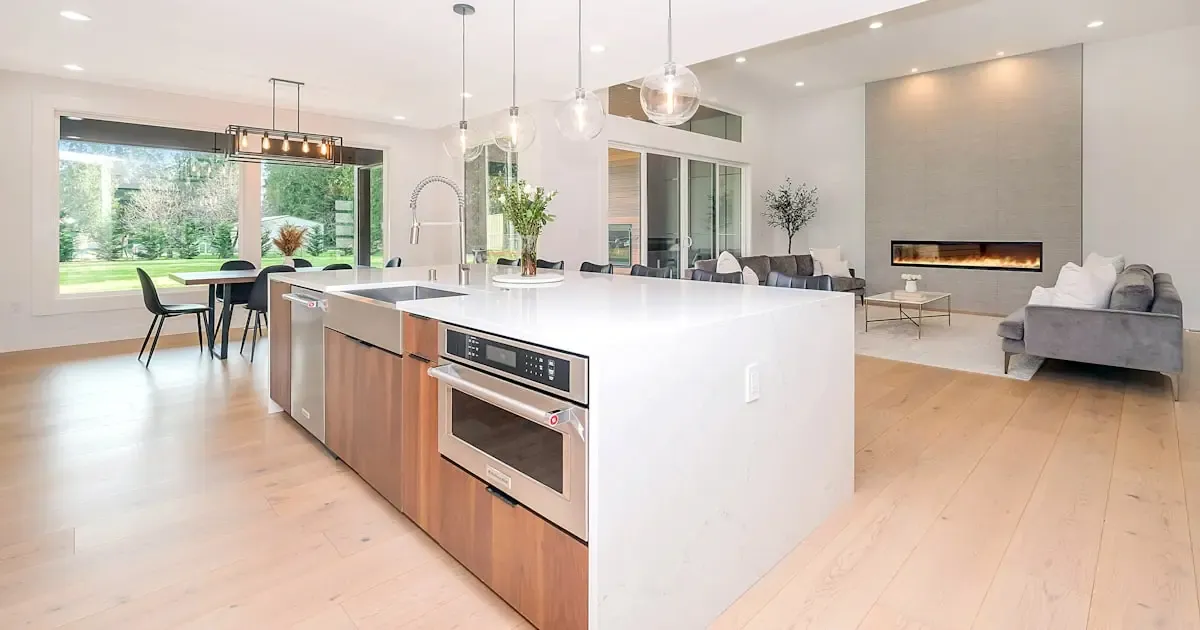
A renovation loan is a single-close mortgage that combines a home’s purchase price with the budget for repairs, based on the home’s after-improved value. In Southeast Minnesota the main options are the FHA 203(k) Standard for major or structural work and the conventional HomeStyle® and CHOICERenovation® loans for borrowers with higher credit scores. Plan on a 45–60 day closing, a 10–15% contingency reserve, and licensed, lender-approved contractors.
What Is a Renovation Loan and How Does It Work?
A renovation loan is a single-close mortgage that combines the purchase price of a home with the budget for repairs or upgrades. Unlike a traditional home equity line of credit (HELOC) or personal loan, which require you to own the home first and then apply for more debt, this solution integrates the costs from day one. At the Heichel Team, we see this as the ultimate solution for buyers who want to move into the right neighborhood but can’t find a home with the right finishes.
By basing the loan amount on the projected after-improved value of the property, buyers can unlock the potential of older neighborhoods without draining their post-closing savings. Whether you are looking at a mid-century rambler in Rochester’s Pill Hill or a historic charmer in Austin, these specialized financing tools bridge the gap between “good enough” and “dream home.”
The process follows a specific structure to protect both the homeowner and the lender. Work must begin within 30 days of closing and cannot cease for more than 30 days at a time. All work must be completed by licensed professionals. At the Heichel Team, we do not allow “self-help” or DIY labor, to ensure the structural integrity and value of the investment.
Navigating the Southern Minnesota Housing Market
The current landscape in Southern Minnesota favors those who can see past dated wallpaper or an unfinished basement. In Rochester, the City of Rochester recently updated its requirements, now mandating building permits and inspections for all residential re-roofing, re-siding and window replacement projects. This makes professional oversight more critical than ever.
In Austin, MN, where infrastructure projects often impact residential accessibility (such as the June 2026 repairs on 16th Avenue NW), planning a renovation requires a deep understanding of local logistics. Buying an older home in these areas often results in “sweat equity” (even if the contractors do the sweat for you), as the after-improved value of a modernized home in a mature neighborhood frequently exceeds the total investment cost.
Comparing Your Renovation Loan Options
Choosing the right loan depends on the scale of your project and your down payment goals. Here is how the primary options stack up for Southern Minnesota buyers in 2026:
| Loan | Best for |
|---|---|
| FHA 203(k) Standard | Major projects: moving walls, replacing a septic system, adding square footage. Requires a HUD consultant who releases funds as milestones are met. |
| FHA Limited 203(k) | Smaller, non-structural updates on an FHA loan. |
| Fannie Mae HomeStyle® / Freddie Mac CHOICERenovation® | Borrowers with higher credit scores. Structural and non-structural repairs plus site amenities like landscaping or fences; also available for one-unit investment properties and second homes. |
| VA renovation | Eligible veterans who want to buy and renovate with no down payment. Learn more. |
Common Questions: Timeline, Contingencies and Living Arrangements
How long does it take to close?
Renovation loans are slightly more complex than traditional mortgages. We recommend planning for a closing period of 45 to 60 days. This accounts for contractor bid reviews, property inspections and the specialized appraisal process that determines the future value of the home.
Can I live in the home during the renovation?
If the home is deemed “uninhabitable” during the construction phase (common with FHA 203(k) Standard loans), you have the option to finance up to six months of mortgage payments directly into the loan. This prevents you from having to pay both your current rent or mortgage and the new mortgage while you can’t move in.
What if the contractor finds “hidden” problems?
Every renovation loan includes a mandatory contingency reserve. Usually set between 10% and 15% of the renovation budget, these funds are set aside for unforeseen issues like mold, outdated wiring or structural surprises behind the walls. If you don’t use the contingency funds, they are simply applied to pay down the principal of your loan.
Creating Value: The “Sweat Equity” Advantage
Consider a scenario common in Austin, MN: you purchase a home for $250,000 that lacks a garage and only has one bathroom. Using a HomeStyle® loan, you wrap $40,000 in repairs to add that second bath and a two-stall garage. If the after-improved appraisal comes in at $310,000, you have immediately gained $20,000 in equity.
By opting for a renovation loan, you aren’t paying a premium for someone else’s design choices. You are investing in a home that fits your lifestyle from day one, while potentially building wealth faster than you would with a move-in-ready property. In Southern Minnesota’s high-demand market, the ability to create your own inventory is a game-changer.
Contractor Checklist for a Minnesota Renovation Loan
You select the contractor, but the lender must approve them. Before you sign a contract, make sure your builder has:
- Valid Minnesota license: a current Residential Building Contractor or Remodeler license from the Minnesota Department of Labor and Industry.
- General liability insurance: typically a minimum of $1,000,000 in coverage.
- Workers’ compensation: mandatory unless the contractor is a sole proprietor with no employees.
- Detailed W-9: signed for the contracting entity.
- Itemized bid: a line-item breakdown of labor and materials. Lump-sum estimates are generally not accepted by underwriters.
How to Get Started With Your Minnesota Renovation
- Meet with a renovation specialist. Contact the Heichel Team to determine your maximum budget based on your current credit and the projected future value of a home.
- Define your target neighborhood. Whether it’s North SE in Rochester or near the Hormel Nature Center in Austin, look for homes with “good bones” that need cosmetic or structural updates.
- Get pre-qualified. We’ll provide a pre-qualification letter that explicitly mentions renovation financing, giving you a competitive edge on fixer-uppers.
- Select your licensed contractor. Use the checklist above to choose a builder who understands the draw process and inspection requirements.
- Finalize the bid and close. Once you have a home under contract and a contractor bid in hand, we order the as-completed appraisal and move you toward a single-close completion.
Explore more on our renovation loan page.
Frequently Asked Questions
Do I have to hire a contractor myself for a renovation loan?
Yes, you select the contractor, but the lender must approve them based on licensing, insurance and experience. In Minnesota that means a current Residential Building Contractor or Remodeler license from the Department of Labor and Industry, general liability coverage (typically $1,000,000), workers’ compensation unless they’re a sole proprietor with no employees, a signed W-9, and an itemized bid.
What happens if the renovation costs more than the appraisal?
The loan is limited by loan-to-value ratios based on the after-improved value. If the bid is significantly higher than the value added, you may need to adjust the scope of work or cover the difference.
Are there limits on what I can renovate?
Generally, repairs must be permanently affixed to the property, such as cabinetry, flooring, HVAC and structural additions. Luxury items like pools are allowed under HomeStyle® but excluded under FHA 203(k) guidelines.
How long does it take to close on a renovation loan?
Plan for 45 to 60 days to allow for contractor bid reviews, inspections and the specialized as-completed appraisal.
Can I live in the home during the renovation?
If the home is uninhabitable during construction (common with FHA 203(k) Standard loans), you can finance up to six months of mortgage payments into the loan.
Reviewed by Kris Heichel, NMLS #27180. This article is for general education and isn’t a commitment to lend; programs and guidelines change.